· 5 min read
Kukeri: why Bulgaria’s masked men chase evil with bells
Every winter, men in horns, hides and heavy bells go round Bulgarian villages making a noise you can hear from the next hill. It isn’t a carnival — the custom is older than the calendar.
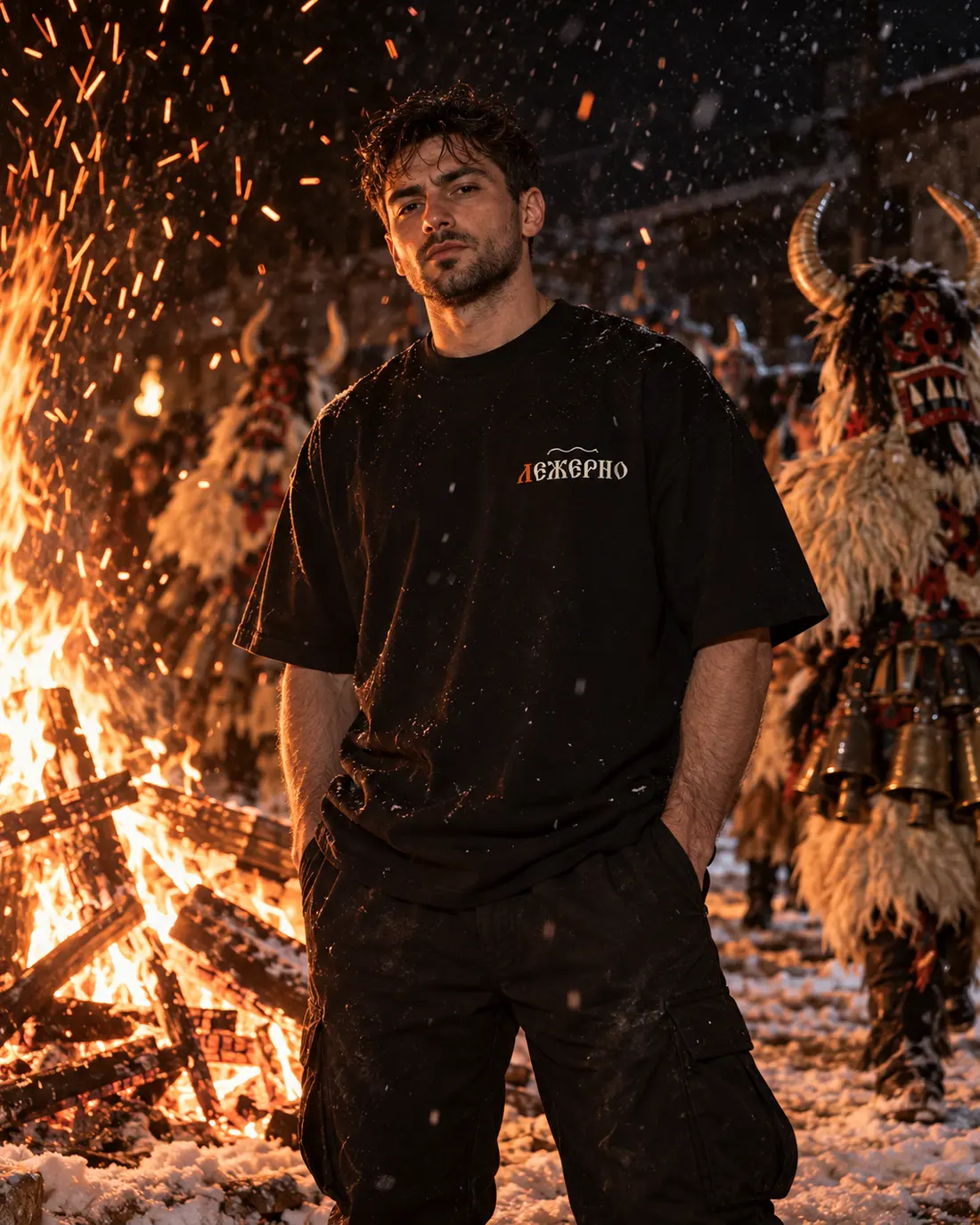
Every winter, between New Year and Sirni Zagovezni — the Sunday before Orthodox Lent — men in huge masks, hides and heavy bells come out in Bulgarian villages. You hear them long before you see them. They are called kukeri, and the custom is far older than Christianity.
Where the custom comes from
The kukeri games are linked to the Thracians and their festivals for Dionysus — the god of wine, fertility and spring, who dies and returns. What’s certain is that the custom is pagan. Its meaning is simple: winter is leaving, evil has to be driven out, and the earth has to be woken.
Kukeri, survakari, babugeri
It’s one custom, done differently in each region. In western Bulgaria — around Pernik, Breznik and Radomir — the groups come out around New Year and are called survakari or startsi. In Thrace the kukeri come out on Sirni Zagovezni, before Lent. Around Razlog they are called babugeri. Every group keeps its own masks, costumes and game.
The mask, the hides, the bells
- The mask — wood or leather, with horns, feathers, beads and small mirrors. It has to be more frightening than the evil it chases. Some stand a metre tall or more.
- The hides — fur turned outwards, covering the man completely. Under it, the kuker is no longer himself.
- The bells — heavy bells at the waist, together weighing tens of kilograms. The noise is the weapon: evil can’t stand it.
- The stick or sabre — wooden, to “strike” evil and clear the way.
What the kukeri do
The group goes from house to house. The households meet them with wine, bread and money, and the kukeri bless the home with health and a good harvest. Many games have roles — a king, a bride, an old woman, a priest.
The round often ends with a ritual ploughing and sowing: the “king” throws grain while the kukeri pull the plough. In some villages one kuker “dies” and is brought back to life — winter leaving, spring arriving.
Where to see them
- Surva in Pernik — the largest gathering of masquerade groups, on the last weekend of January. The Surova feast of the Pernik region is on UNESCO’s list of intangible cultural heritage.
- Kukerlandia in Yambol — around Sirni Zagovezni.
- The babugeri around Razlog — around New Year.
- The villages. Often the best of it is in small places, where the custom isn’t a show but something people do for themselves.
“Злото бяга” — evil runs away
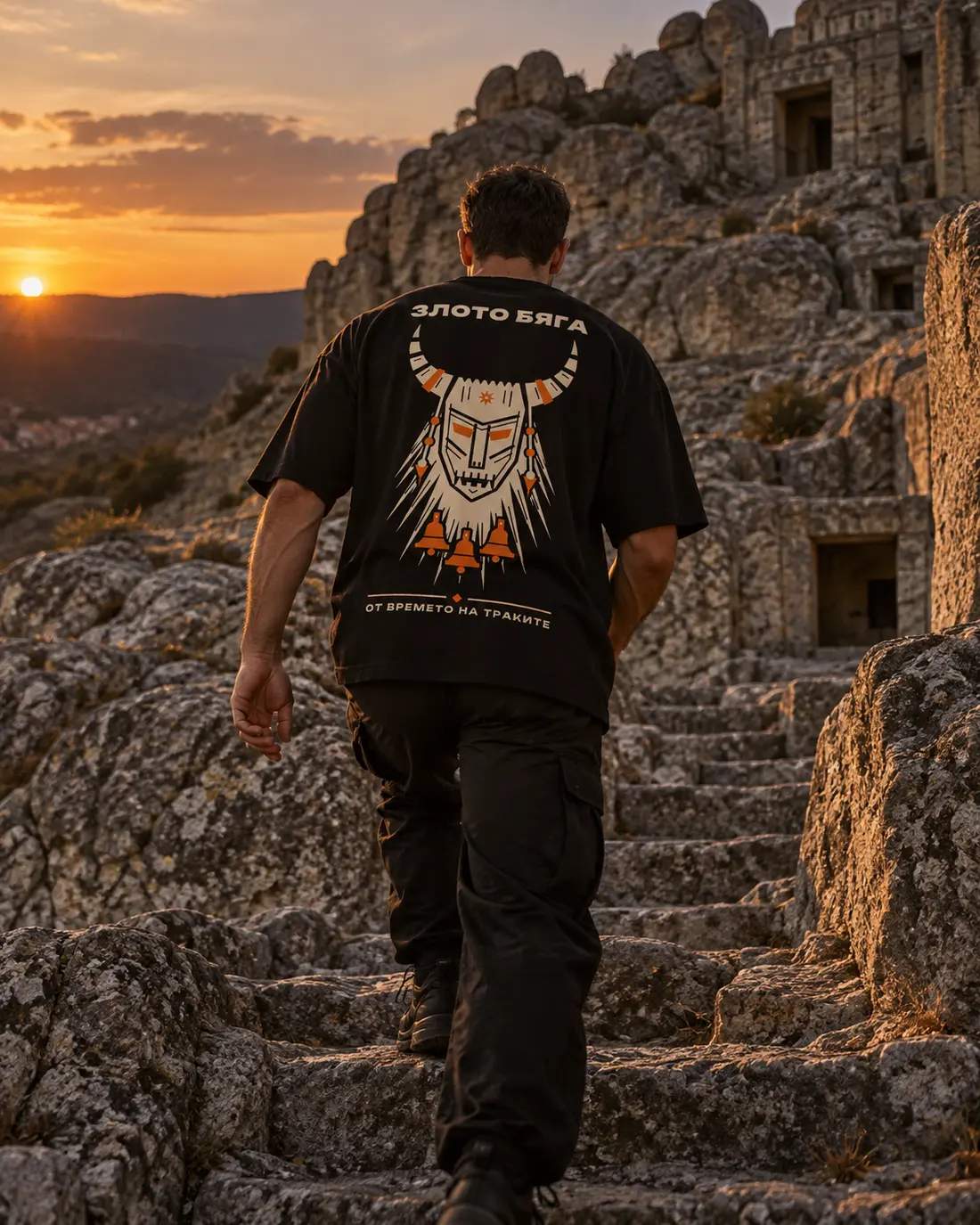
The kukeri are the first legend in our Dark Folklore collection. On the back of the „Злото бяга“ tee is a geometric kukeri mask with horns, a sun on the forehead and three bells, under the words “Злото бяга” — evil runs away.
In short
Kukeri are men in masks, hides and bells who go round the villages in winter and drive evil away with noise. The custom is pagan, older than Christianity, and still alive — the biggest gathering is Surva in Pernik.