· 4 min read
Orisnitsi: the three sisters who speak a child’s fate
On the third night after a birth, three sisters stand over the cradle. What they say will be — and no one can change it.
The orisnitsi — also called urisnitsi or narechnitsi — are three sisters who come on the third night after a child is born. They stand over the cradle and speak its fate: how long it will live, what it will become, what it will do and whom it will marry. The eldest has the last word, and after it nothing can change.
The third night
The house gets ready for that night. Bread, wine and honey are left on the table so the orisnitsi arrive in a good mood — an angry one might speak a bad fate. The light stays on, and mother and child are never left alone.
Nobody sees the orisnitsi. Sometimes only the mother hears them, or sees them in a dream — so in the morning she was asked what she had dreamt, and her dream was read for what they had decided.
What is spoken will be
In the tales, fate always finds its way. If the orisnitsi foretell that a boy will die on his wedding day, his parents guard him all his life — and still it reaches him. The lesson is always the same: what is spoken will be. The Bulgarian word “oris” means fate, one’s lot.
Three sisters elsewhere
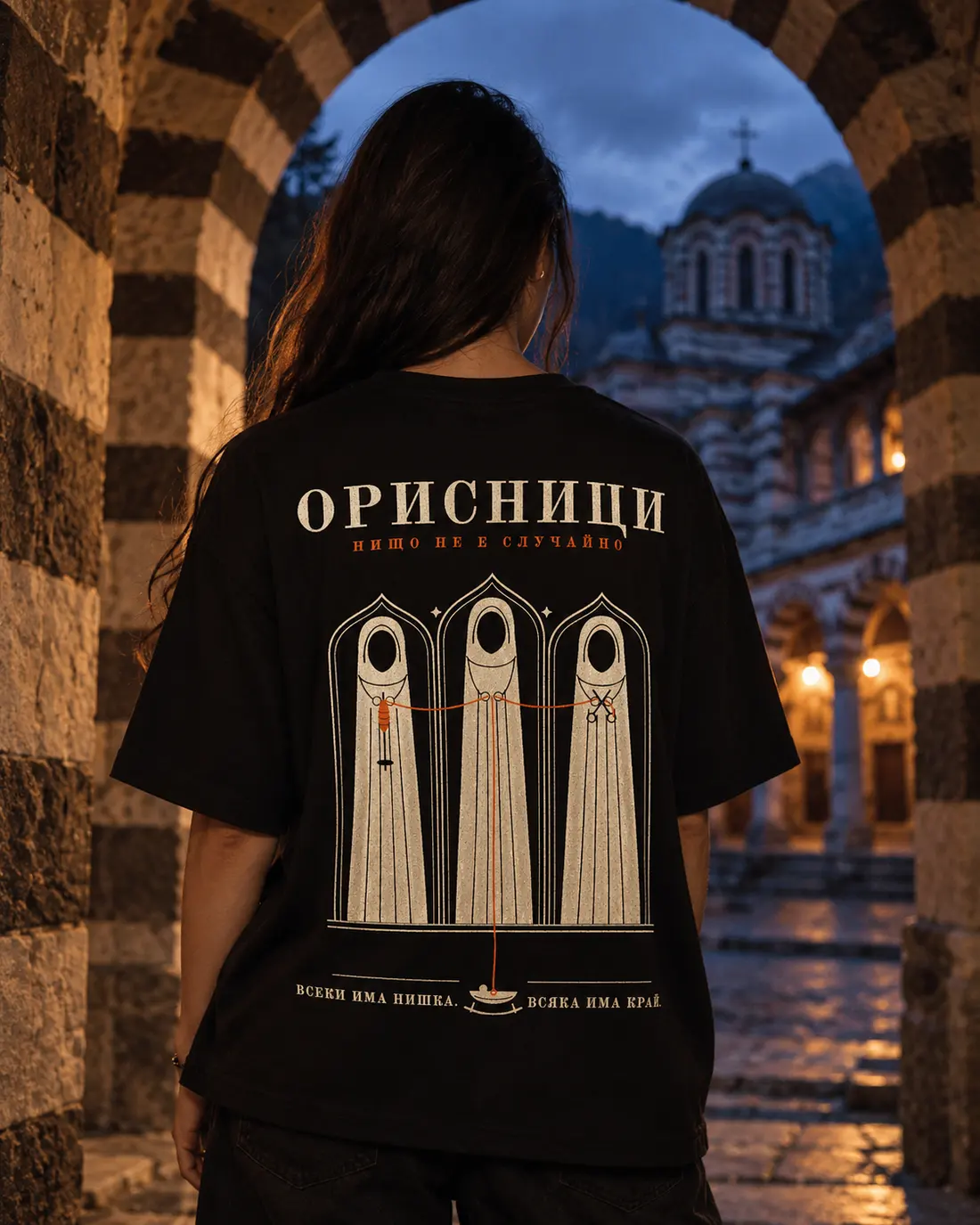
The image isn’t only Bulgarian. The Greeks have the Moirai — Clotho, who spins the thread of life, Lachesis, who measures it, and Atropos, who cuts it. The Norse have the Norns. Our print takes its thread from that old picture: one sister spins, one holds, one cuts.
The baby’s pogacha
What is left of the custom today is the baby’s pogacha, a round bread broken over the child’s head while the family speaks wishes — for health, wit and luck. Often three close women speak the wishes “as the orisnitsi”, and the guests add theirs.
“Нищо не е случайно” — nothing is by chance
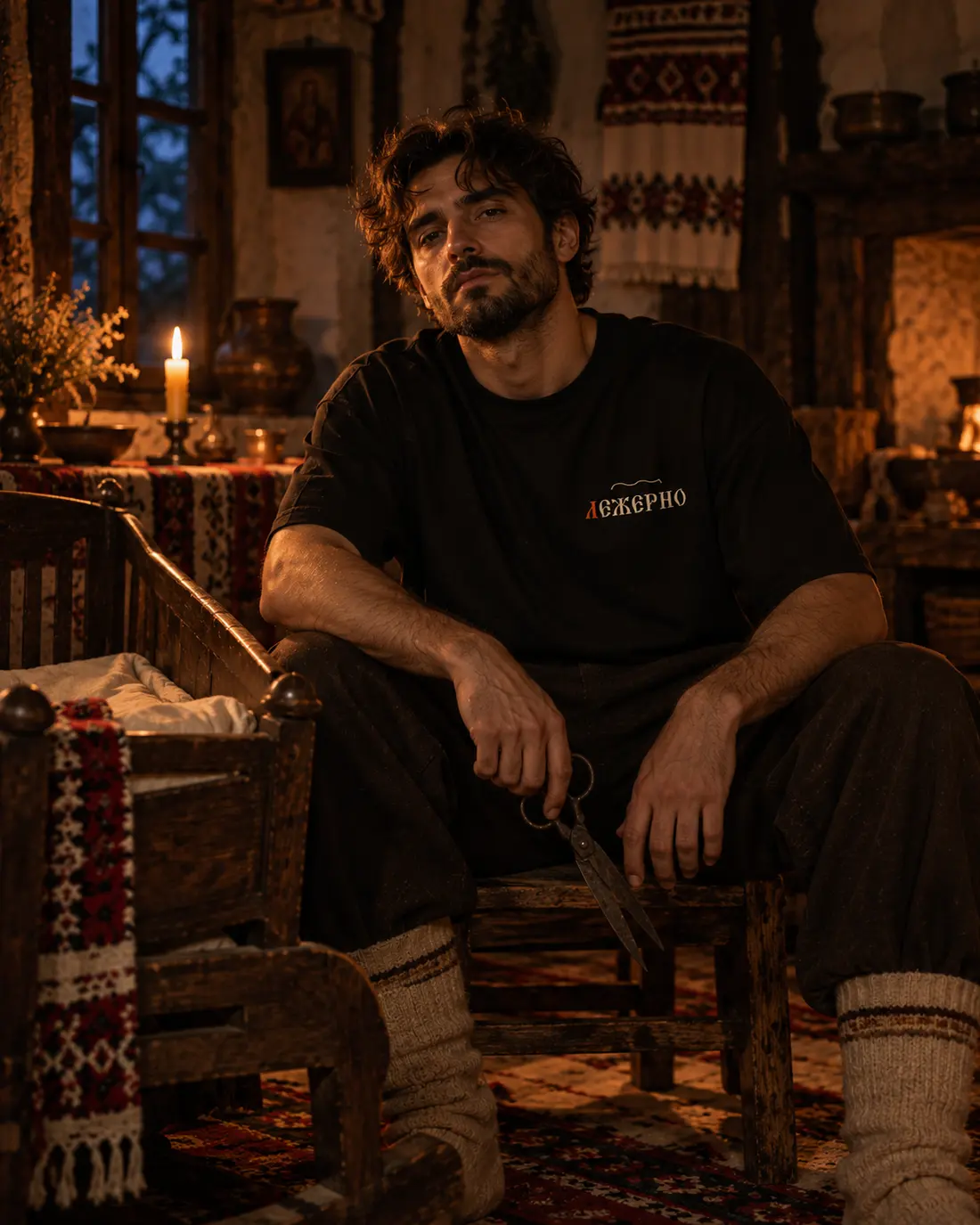
The orisnitsi are the fourth legend in our Dark Folklore collection. On the back of the „Орисници“ tee are three veiled sisters under gothic arches, the orange thread dropping straight into the cradle between “Всеки има нишка” and “Всяка има край” — everyone has a thread, every thread has an end.
In short
The orisnitsi are three sisters who come on the third night after a birth and speak the child’s fate. The house welcomes them with bread, wine and honey, nobody sees them, and the eldest has the last word. Today the custom lives on in the baby’s pogacha.